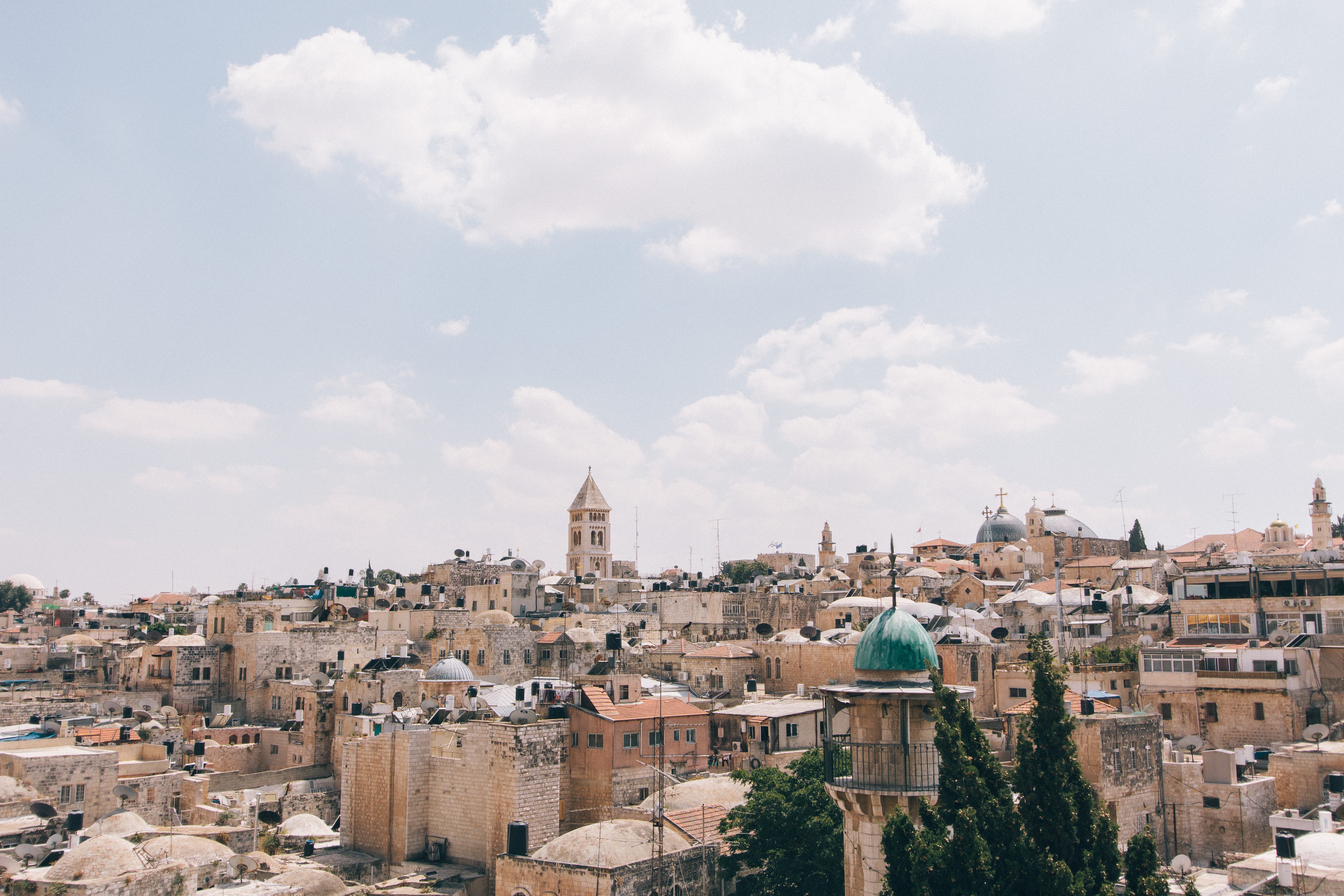
This article canvasses East Jerusalem Arabs focusing on their traditions and culture. Jerusalem is inhabited by a great percentage of Arabs which makes it important to understand this segment of the Israeli society. It has great influence on Jerusalem and needs to be understood from all different categories of the society. As a result of the 1949 Armistice Agreements, the city's western half came under Israeli control, while its eastern half, containing the famed Old City, fell under Jordanian control that made it more connected to the west bank that was also under the Jordanian control. East Jerusalem is known to be Arab although 39.6% of East Jerusalem residents are not Arabs. However, the interaction between the Arabs and the non-Arabs in east Jerusalem is scrawny, which makes the Arabic area maintain its traditions and culture, and closed within itself. We will be talking in this article about the conservativity and the progressive motility in east Jerusalem. Additionally, traditions, culture and where do both come from. Nonetheless, we will talk about taboos, religion, and how they are connected to each other. Lastly, this article will also explain about education in east Jerusalem which leaves a great influence on it.
Prudence
The reason that east Jerusalem is adherent to its traditions and circumspect is the lack of interaction with externals which makes it more closed to itself. Following the Armistice Agreements in 1949 east Jerusalem fell under the Jordanian control in combination with the west bank, which explains the relationship between the west bank and east Jerusalem that both were behind the green line. That also explains why some European countries such as Germany do not consider east Jerusalem as part of Israel. Arab residents of east Jerusalem retain their own outstanding lifestyle that is different from West Bank Arabs, 1948 Arabs, and Gaza district Arabs. They have the Israeli permit residence but not citizenship, which makes them in between Israel and the west bank. Maqdisyin can work in Israel, live, and benefit of Israeli laws that help make a better quality of life, such as health insurance, greater wages, and pension. However, east Jerusalem Arabs do not learn Hebrew in schools which makes it harder for them to interact with Israelis and creates a gap between them. This society prefers to stay within each other as they feel more comfortable to stay together. They have their own shopping places, restaurants, streets, neighbourhoods. In addition, when they feel like they want to change their routine and get out of the city Ramallah, which is the biggest city in the west bank, is their first option to go. They pass the checkpoint in order to reach there. Kofar Aqab, a neighbourhood behind the wall, which is located in north east Jerusalem, makes its residents more connected to the west bank, as they do not have to cross any checkpoint. Furthermore, when they go to Tel Aviv, they stay in the mainly Arabic part called Jaffa. There are fears and agitation in east Jerusalem Arabs towards Israeli places that are mainly Jewish. For them, it is strange and out of their comfort zone to be there. It is difficult to get out of their own cave.
Culture and traditions
As east Jerusalem is closed within itself, this helps maintain its own culture and traditions that are extremely different from western Jerusalem. Asking a person from east Jerusalem about a Jewish holiday, they will probably find it hard to answer. They have their own lifestyle, own system, and their own traditions. The majority of east Jerusalem residents came originally from Hebron as they found better work opportunities. Therefore, many traditions are originally from Hebron. Such as wedding traditions, accent, conservativity. Families who are not originally from Hebron in east Jerusalem are known to be less conservative. Additionally, it is vital to mention the families’ system in east Jerusalem as it is a big part of its culture. Families there are similar to Tribes. The tribe’s system is taken as a type of protection in east Jerusalem that many families defend themselves instead of calling the police in cases like crimes. This system is historically from the Arabic tribes (the beduins). Although there are only a few families, they can contain up to thousands of members. Therefore, Maqdisyin know each other like they live in a small village. This system makes the family control its members, which makes it harder to get out on your own and make a change for yourself. That could be a reason why it is hard to fight the taboos and religion there.
Religious Taboos
Culture, traditions, and Taboos in east Jerusalem are mainly connected to religion. Most east Jerusalem Arabs espouse Islam as their religion, and only a minority is Christian. However, Adherents of both religions have mutual traditions that are connected to their religion. For example, prudery is one of the strictest taboos. Indecent dressing, especially for women, is strictly unacceptable in east Jerusalem. The boundaries of the top are until the shoulders, and on the bottom side are until the knees. The consequences for indecent dressing can be gazes from the people and hearing comments. Another taboo is Fornication (adultery), it is a great sin specially for women that can lead to the woman to be killed by her family. Having sex before marriage is forbidden by Islam and Christianity to both genders, however, in the Arabic society (not only in east Jerusalem) is mainly forbidden for women. In addition, dating is also a taboo in east Jerusalem as a result that it is haram. Briefly, in east Jerusalem everything that is haram (forbidden by Islam) is unaccepted publicly especially for women. “La aib w la Haram” is an Arabic saying that means “it is not a vice and not a taboo” which is said when someone wants to describe that it is fine to do something, the most important is to be accepted by the society and the religion. Furthermore, most of the things that are forbidden by religion are not accepted in society like homosexuality, Apostasy from religion, and alcohol for Muslims. Along with that, being non-religious can be accepted if your family is accepting it as well. However, walking on the path of Islam, then backing away from it is unacceptable. Saying “unacceptable” means people will talk, but only the family can decide what to do regarding it. For instance, women who do not wear hijab are accepted in east Jerusalem, but if they decide to wear it then backing away is unacceptable. In conclusion, religion is crossed through the Arabic traditions that some people just do it without not because they are religious but because these are the traditions. Eventually, education teaches people to think and to be aware of their beliefs.
Education
One of the greatest barriers between Arabs and Jews in Jerusalem is language. As mentioned earlier in the article, east Jerusalem is more connected to the west bank as both were controlled by Jordan. Therefore, after the Jordanian curriculum has been studied in there until Oslo agreement, then the Palestinian curriculum started to be taught gradually in schools grade by grade, the west bank and east Jerusalem continued to study the same curriculum. Hebrew is not taught efficiently in east Jerusalem, some schools teach the basics, and some do not, which creates a gap between east Jerusalem Arabs and Israelis because of lack of communication.
The Palestinian curriculum is based on preservation and indoctrination policy. It does not teach students about critical thinking or research. Most students graduate without knowing the basic steps to do research or to write an article. The main method to collect points in the Palestinian curriculum is to memorise the lessons and to write them in the exam. The more it matches the book the higher the grade is. This system does not help students to gain knowledge, because after memorising the student is more likely to forget the information they have memorised. Giving students information in a direct way and not helping them on thinking or criticising and searching for their information is destroyable.
Lastly, it is also important to mention that the Arabic society in east Jerusalem is changing towards the better gradually. There is a good percentage of progressive young east Jerusalem Arabs who are critical and seeking for a change. In addition, after the decision of the municipality of Jerusalem to support east Jerusalem Arabs to learn Hebrew and to study in Israeli institutions, the interaction between young Arabs and Israelis began to increase. This is a step for a change, and gradually, the Arabic society in Jerusalem will be merging more and more with the Israelis.